Home / Writing

Thoughts at the intersection of strategy & AI.

A woman parachuting through a clear sky
08

Taste isn't the moat. You're guarding the wrong thing.

Taste judges what got made; sense decides what is worth making. Taste says fix the spacing on the landing page — sense says you do not need a landing page, you need a WhatsApp message to twelve people.Read on Substack →
10

The Window Is Closing

ClickUp's CEO cut 22% of staff with no financial pressure to do it, because the math of how work gets done had changed. The essay sets passive AI adoption, which creates a false sense of readiness, against restructuring from a position of strength.Read on Substack →
19

Today, exactly five years ago, I boarded a flight to New York. For love.

Flying to New York inside the COVID lockdowns, when every government office was shut and there was no way to renew a passport. A case study in what certainty makes possible, now pointed deliberately at building a business.Read on Substack →
07

AI is changing me.

A first-person account after a year of intensive use: more explicit, better context, less assuming the other side understands — and noticeably less patience for inefficient communication.Read on Substack →
15

My hack for consistency (that isn't discipline)

Discipline runs on norepinephrine — stress and effort, which deplete. Curiosity runs on dopamine, so writing becomes “what resonates with my audience?” and a workout becomes an experiment on the body.Read on Substack →
06

The Authenticity Singularity: Leading in a World of Perfect Fakes

When output can be flawless, perfection starts to signal automation rather than excellence. A VP earned her trust by talking openly about managing a difficult boss, not by hitting revenue targets.Read on Substack →
03

Prompting is 10% Syntax, 90% Clarity of Thought

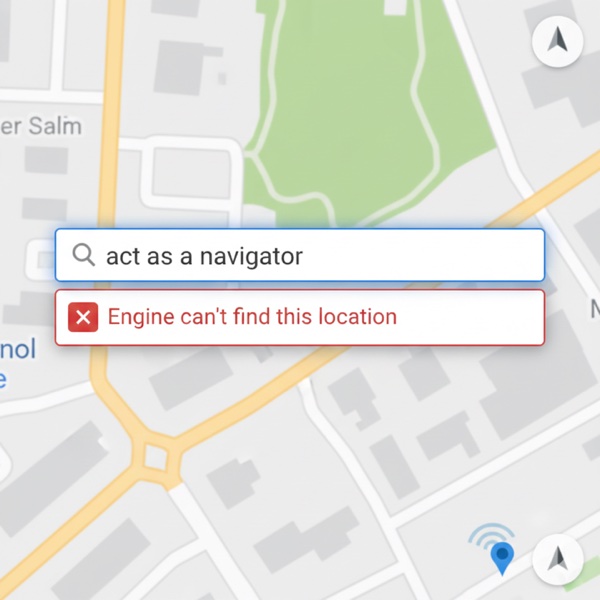
The people who get the most out of models are not the ones who memorized delimiters and XML tags. If you cannot explain your intent to a junior hire without confusing them, adding “Act as a…” will not fix it.Read on Substack →
13

Your Brain Is a Legacy System. Time for an Upgrade.

A Series B founder spent three hours reviewing AI-generated specs — not writing them, not deciding strategy, just checking for hallucinations. The argument: stop spending System 2 attention as a spellchecker, and move from Processor to Architect.Read on Substack →
02

Strategic Fatigue: Why Faster AI Is Slowing Teams Down

Leaders optimize for output speed instead of decision speed. When AI floods a team with alternatives, people stop thinking critically and start approving things just to move on.Read on Substack →
11

The Strategic Ghost

Strategy fails less often from bad thinking and more often from unspoken fear. The tells are familiar: a debate turns oddly emotional, someone goes quiet, the group keeps circling the same safe option.Read on Substack →
01

AI Adoption Isn't the Problem. Trust Is.

75% of organizations use AI somewhere, yet most keep it out of their critical functions. The blocker is not model quality — it is fragmented data, unclear ownership and missing accountability, and a better model fixes none of those.Read on Substack →
12

What habit are you, as CEO, building today?

Goals are cheap, execution is expensive, and execution comes from habits rather than ambition. What a CEO repeats daily is what the strategy actually turns into.Read on Substack →
16

Discipline Is Being the Butler of the Future.

Built on Chase Hughes's framing of discipline and applied to strategy leadership through four mechanisms: strong observation, earlier commitment, friction removal, and capability before urgency.Read on Substack →
17

Fool's Gold or Genius Hack? The Art of Positive Self-Deception

She kept swimming extra laps after already hitting the goal, so the brain would log the activity as indulgence rather than a spoonful of cough syrup you rush through. Small shifts in how an activity is recorded change the motivation around it.Read on Substack →
14

The Dopamine Dip: Why Your Grand Plans Go Poof

Most resolutions die by February because the dopamine is attached to the end state instead of the effort. Drawing on Huberman: focusing only on the reward makes the process feel more painful and time feel longer.Read on Substack →
18

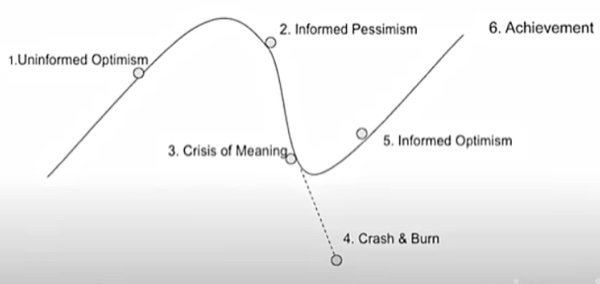
Visiting the Crisis of Meaning Is Like Visiting an Old Friend

Stage three of the entrepreneurial journey is where people stop, holding every piece of knowledge and every resource they need. Knowing what to do was never the hard part — engineering yourself to want to do it is.Read on Substack →
04

Be clear and detailed — but leave room for AI to run its magic

Two ways a prompt fails: too abstract and the output is creative but unusable, too detailed and it hands back exactly what you already knew. The sweet spot is clear goals plus clear constraints.Read on Substack →
09

Why Now Comes Before Why — Sorry, Simon Sinek

Strategy does not emerge in a vacuum, it emerges from pressure. Naming the uncomfortable forces out loud — fear, urgency, insecurity, impatience — stops them from steering the decision unnoticed.Read on Substack →
05

When building with AI, sometimes start with a pen and paper

Brainstorming is expansion and focus. AI expands before the focus exists, so the order matters: map goals and constraints on paper first, then bring the model in to amplify thinking that already holds.Read on Substack →
The newsletter

New essays land in your inbox.

No schedule I can promise and no growth funnel behind it. I write when an idea has earned the time it takes to write it properly.

Subscribe on Substack